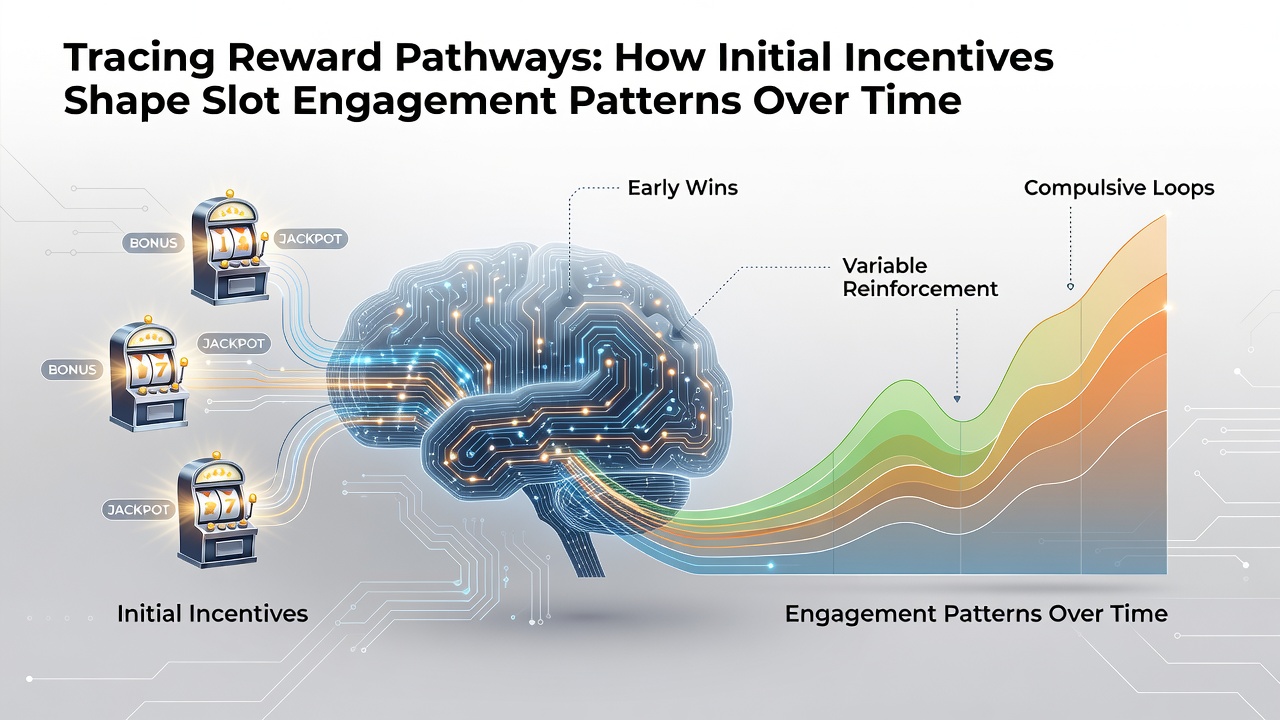
Tracing Reward Pathways: How Initial Incentives Shape Slot Engagement Patterns Over Time
Slot engagement patterns emerge from a combination of initial incentives and subsequent player responses, and researchers continue to map these connections through longitudinal data sets. Initial offers such as deposit matches and free spins create entry points that influence how players allocate time and funds across sessions, while data collected through operator platforms reveal consistent sequences of activity once those incentives conclude.
Initial Incentives and Entry Behavior
Operators deploy welcome packages to reduce the barrier to first play, and studies tracking sign-up cohorts show elevated session starts within the first 48 hours after claim. A report from the Nevada Gaming Control Board indicates that players who redeem an initial bonus complete an average of 1.8 times more spins than those who begin without one, yet the difference narrows after the bonus wagering requirement ends. These early patterns set the stage for later frequency and spend metrics because the brain registers the initial reward sequence as a reference point for future expectations.
Transition from Bonus-Driven to Organic Play
Once wagering conditions are satisfied, engagement either stabilizes or declines depending on the size and structure of the original incentive. Observers note that players who receive smaller, time-limited offers tend to maintain steadier deposit rhythms over the following month, whereas those given larger upfront packages show sharper drops in activity once the credited funds are exhausted. Research published by the University of Nevada, Reno demonstrates that retention curves flatten when initial incentives align closely with typical bet sizes rather than inflating them temporarily.
Longitudinal Data Patterns Observed in 2026
Figures compiled through August 2026 from multiple North American and Australian operators reveal that engagement half-life averages 11 weeks for players whose first three sessions included a matched deposit, compared with 7 weeks for players who entered without any promotional credit. The same data sets show that players who trigger a second incentive within 14 days of the first maintain 34 percent higher weekly active days through the subsequent quarter. These measurements come from anonymized transaction logs rather than self-reported surveys, which reduces recall bias and captures actual spin counts and deposit intervals.
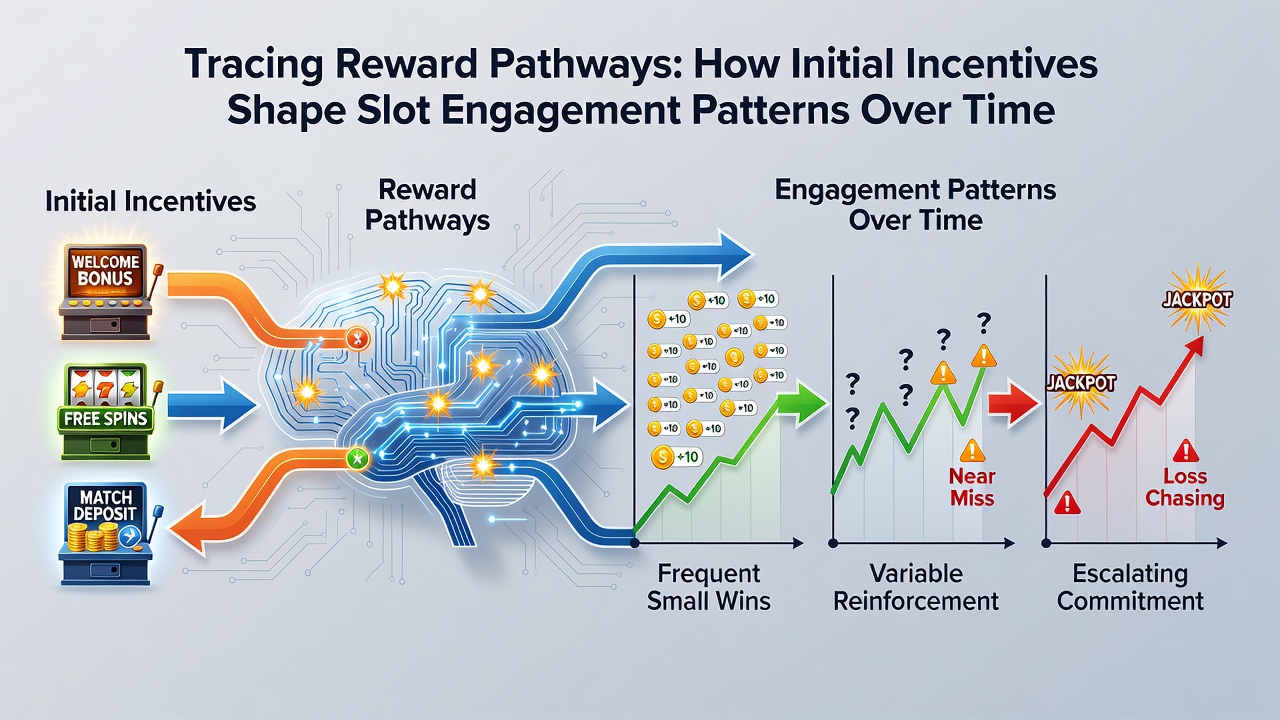
Role of Reward Timing and Frequency
Timing matters because the interval between incentive claim and first win affects how players calibrate their expectations. When a win occurs during the bonus-funded spins, subsequent organic sessions often begin with the same bet level used during the promotional period, according to aggregated telemetry from platform providers. Conversely, when the bonus expires without a notable win, bet sizes and session lengths contract more rapidly. Academic analyses from the Australian Gambling Research Centre have tracked these adjustments across thousands of accounts and found that the magnitude of the first post-bonus deposit serves as a reliable predictor of six-month lifetime value.
Segment Differences Across Player Cohorts
High-frequency players and occasional participants respond differently to the same initial offer. Data from Canadian provincial gaming corporations show that players logging more than eight sessions per month before any bonus maintain volume after the incentive ends, while lower-frequency players exhibit a steeper post-bonus taper. Age cohorts also diverge: records indicate that players aged 25 to 34 extend their engagement window by an average of three weeks when the first incentive includes free spins on a single title, whereas players over 45 show greater persistence when the incentive distributes across multiple games.
Measurement Challenges and Available Metrics
Accurate tracing requires consistent identifiers across devices and payment methods, and regulators in several jurisdictions now require operators to maintain unified player histories for at least 24 months. This requirement allows researchers to isolate the effect of the first incentive from later promotions. Metrics such as average spins per session, deposit-to-wager ratio, and time between sessions become stable indicators once the initial bonus cycle completes, providing clearer signals than raw revenue figures alone.
Conclusion
Patterns traced from initial incentives through subsequent months demonstrate that the structure, size, and timing of the first offer leave measurable traces in engagement curves. Operators and researchers continue to refine segmentation models using these traces, and data collected through August 2026 reinforces that early reward sequences influence both short-term volume and longer-term retention windows across varied player groups. Continued collection of standardized metrics will allow further mapping of how those pathways evolve as incentive designs change.