
Time Distribution Trends Among Newcomers to Slots and Poker Following Bonus Activation
Early Patterns in Leisure Hour Allocation
Industry reports from August 2026 highlight measurable shifts in how fresh participants divide their available hours between slot machines and poker tables once initial promotional offers are redeemed, and data collected across multiple platforms shows that slot sessions often absorb the bulk of early activity while poker play expands more gradually over subsequent weeks.
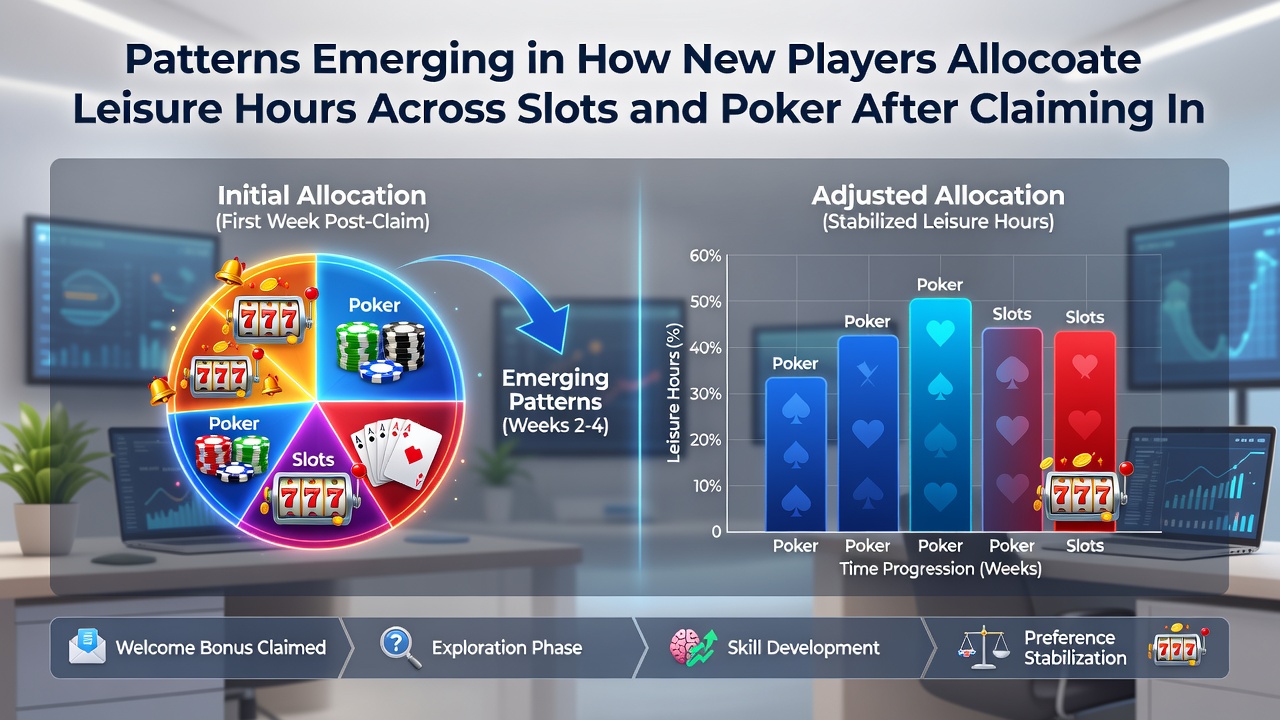
Analysts tracking user logs note that new registrants typically dedicate 60 to 70 percent of their first ten leisure hours to slots when welcome packages emphasize free spins or deposit matches tied to those games, whereas poker tables receive the remaining share as players test basic rules and table dynamics without heavy financial commitment at the outset.
Factors Influencing Slot Session Lengths
Platform metrics indicate that bonus structures featuring timed free spin rounds encourage extended single sittings on slots because players return repeatedly within expiration windows to clear wagering thresholds, and this creates clusters of activity that can stretch across two or three consecutive evenings rather than spreading evenly throughout the week.
Research from the American Gaming Association reveals that average session duration on slots for bonus users lands around 45 minutes per visit during the initial claim period, while those same users log shorter but more frequent intervals once the promotional credits are exhausted and real-money play begins.
Poker Table Engagement After Initial Offers
Observers tracking multi-game accounts find that poker participation accelerates once slot-based wagering requirements are met because players often carry forward any remaining balance into lower-stakes tables where skill elements start to influence outcomes more visibly than pure chance mechanics.
Figures compiled by state regulatory bodies in Nevada show a steady rise in poker table hours among the same cohort between weeks three and six after signup, with many newcomers allocating an additional 15 to 20 percent of their total leisure time to hold'em or omaha variants once they have familiarized themselves with basic hand rankings and betting sequences.
Geographic and Demographic Variations in 2026 Data
Comparative studies conducted in both North American and Australian markets during summer 2026 demonstrate that players in regions with established poker communities shift toward table games earlier than those in markets where slots dominate advertising spend, and this regional difference produces a noticeable gap in hour allocation that persists through the first quarter of activity.
University-led surveys of player diaries indicate that participants aged 25 to 34 maintain a more balanced split between the two formats after the first month, whereas older cohorts continue to favor slots for longer periods even after bonus conditions are cleared.
Platform Design Elements Affecting Hour Distribution
Operators who integrate cross-game loyalty points report higher crossover rates from slots into poker because accumulated rewards transfer directly to table buy-ins, and this mechanism reduces the friction that otherwise keeps new users anchored to one vertical for extended stretches.
Session heatmaps gathered from major sites illustrate that peak poker login times for bonus recipients occur during evening hours on weekdays, whereas slot activity remains elevated across both weekdays and weekends until the initial promotional cycle concludes.
Conclusion
Longitudinal tracking through late 2026 confirms that leisure hour allocation between slots and poker evolves in predictable stages for most new participants after they activate initial offers, with early emphasis on slots giving way to increased poker involvement as familiarity grows and bonus conditions are satisfied. Continued monitoring by regulatory agencies and academic researchers will clarify whether these patterns hold across additional markets and player segments in the coming years.