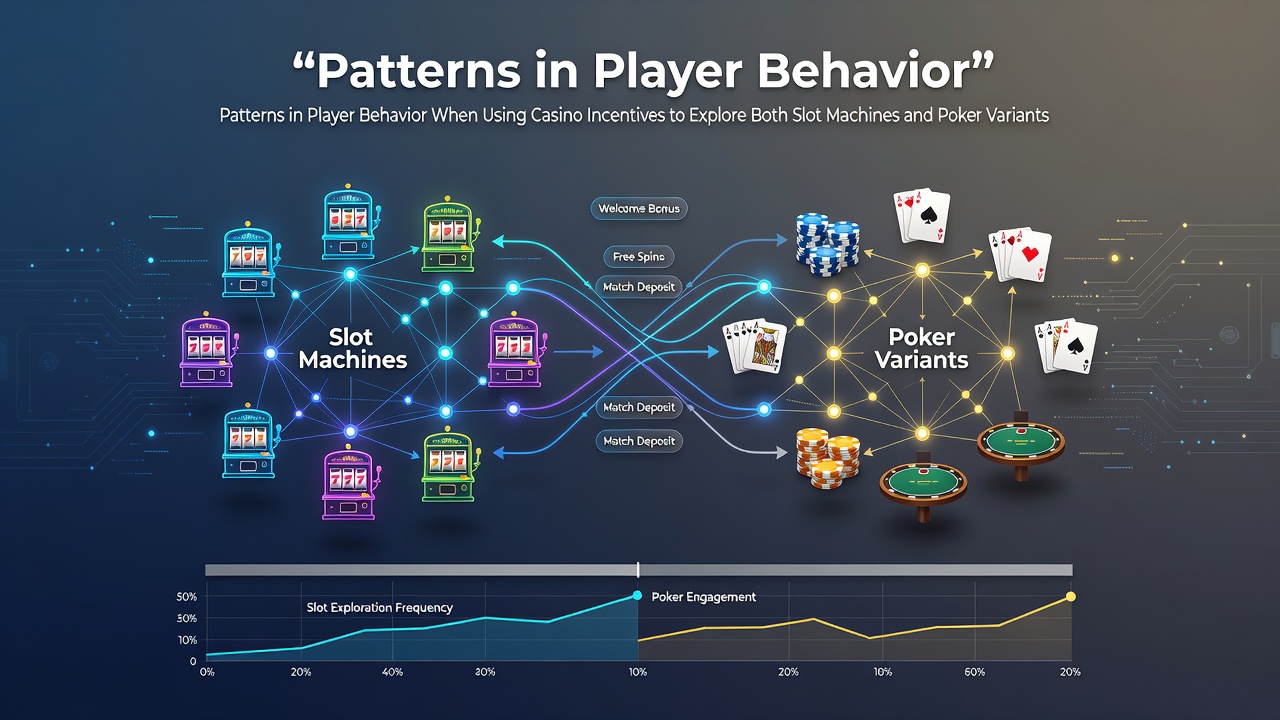
Shifts in Player Engagement: Casino Incentives Driving Exploration of Slots and Poker Variants
Researchers tracking casino activity note that incentives such as deposit matches, free spins, and loyalty points often prompt players to test both slot machines and poker variants within the same session or across multiple visits, and data collected through 2026 continues to highlight these transitions. Patterns emerge when players receive slot-focused bonuses yet divert portions of their bankroll toward poker tables or online variants, while poker incentives sometimes lead participants toward slots for quicker, lower-stakes entertainment. Observers note that these movements reflect calculated responses to wagering requirements and game volatility rather than random choices.
Incentive Structures and Initial Player Responses
Slot bonuses typically arrive with free spins or matched deposits tied to specific reel games, yet studies from industry reports show many recipients explore poker rooms shortly after clearing initial playthrough conditions. Poker variants benefit from incentives like tournament tickets or cashback on rake, and players who begin with these offers frequently sample slots during promotional periods when bonus funds carry over. According to figures from the Nevada Gaming Control Board, slot machine handle increased by measurable percentages during months when poker tournaments advertised added value entries, suggesting cross-game migration. Those who've examined transaction logs find that September 2026 data revealed similar spikes, with players allocating incentive credits across both categories in roughly equal proportions during peak promotional weeks.
Observed Behavioral Sequences Across Game Types
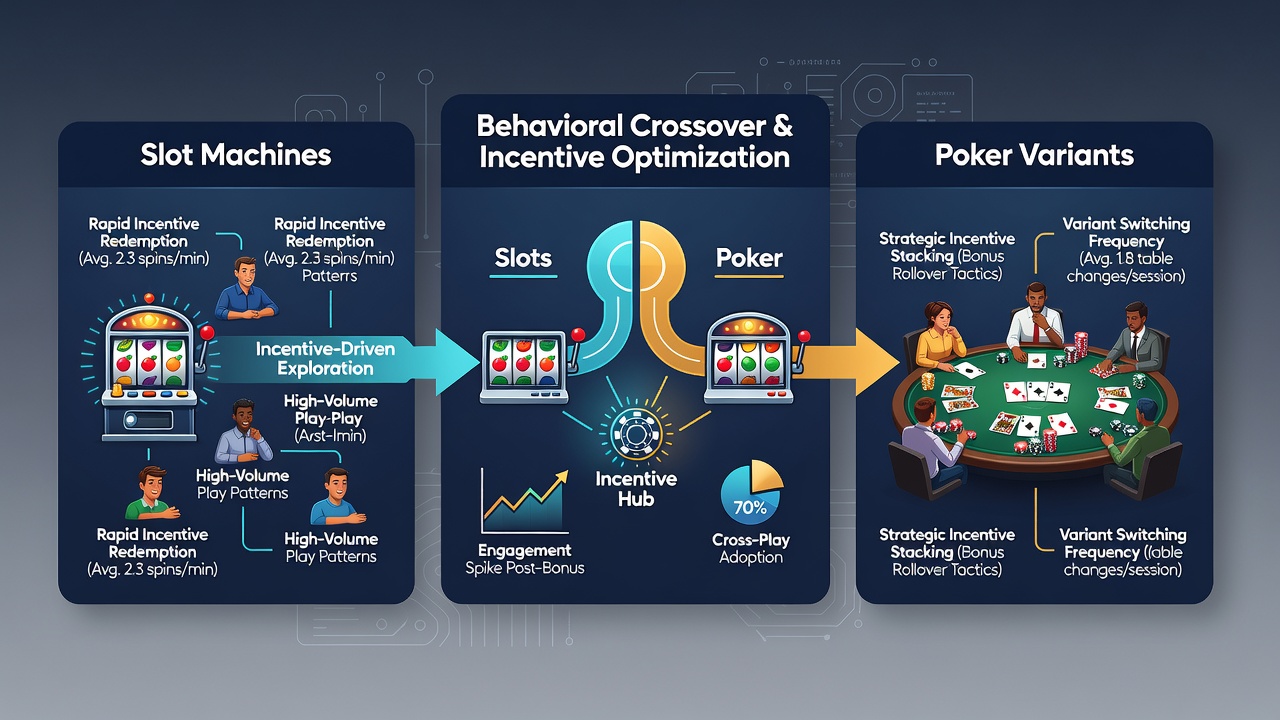
Players often start with slot incentives because free spins require minimal decision-making, and once wagering thresholds near completion they shift attention to poker where skill elements allow extended play with remaining balances. Data indicates that individuals using combined promotions log more hours in poker variants after satisfying slot-specific terms, while poker-first users tend to test slots when facing shorter session times or seeking variance. Research from academic sources such as the University of Nevada's gaming studies division reveals that session logs from online platforms display clear sequences: bonus activation on slots followed by table game entry within the same account activity window. What's interesting is how these patterns hold across regulated markets where tracking remains consistent.
Regional Data and Cross-Game Migration Trends
Reports compiled by the Ontario Lottery and Gaming Corporation document that incentive users in Canadian jurisdictions demonstrate higher crossover rates between slots and poker than non-incentivized players, with September 2026 monthly summaries showing a 12 percent rise in accounts engaging both formats. European data from the Malta Gaming Authority similarly points to players leveraging slot welcome packages before entering poker cash games or sit-and-gos, particularly when loyalty programs award points transferable across categories. Those analyzing these records observe that poker incentives sometimes function as retention tools after slot play, encouraging longer overall platform engagement. Figures reveal that players receiving multi-game bonuses maintain activity levels higher than single-game recipients, though exact causation remains tied to individual risk preferences and bankroll management.
Factors Influencing Transitions Between Slots and Poker
Volatility levels play a central role because slots deliver rapid outcomes that either build or deplete incentive funds quickly, prompting shifts to poker for steadier, decision-based pacing. Players frequently cite lower house edges in skill-oriented poker as motivation to move funds once slot bonuses near exhaustion, and platform analytics confirm these movements occur most often when remaining balances fall below certain thresholds. Industry organizations such as the European Gaming and Betting Association have compiled surveys indicating that age demographics influence the direction of exploration, with younger users favoring slot entry points while older cohorts begin with poker incentives. Yet the overall flow remains bidirectional, as both game types serve distinct entertainment functions within the same incentive framework. And platform designs that integrate unified wallets facilitate these seamless switches without additional deposits.
Longer-Term Patterns and Retention Effects
Longitudinal tracking shows that repeated incentive use across slots and poker variants correlates with sustained account activity rather than one-time spikes, and data through September 2026 reinforces this observation in multiple jurisdictions. Players who alternate between the two formats during promotional cycles exhibit different churn rates compared to those who remain within a single category, though researchers attribute this partly to diversified engagement rather than incentive mechanics alone. Regulatory filings from various regions continue to emphasize transparent tracking of such behaviors to ensure compliance with responsible gaming standards, and the resulting datasets provide clearer pictures of how incentives shape exploration paths over months rather than isolated sessions.
Conclusion
Patterns in player behavior tied to casino incentives demonstrate consistent movement between slot machines and poker variants, driven by bonus structures, game characteristics, and platform features that support cross-category play. Evidence from regulatory bodies and academic tracking confirms these sequences occur across markets, with data extending into 2026 underscoring their persistence. Those monitoring the sector note that unified incentive systems and wallet designs contribute to the observed flows without dictating specific outcomes for individual participants.