
Poker Hand Strength as a Mechanism for Layered Slot Reward Activation in Digital Casinos
Digital venues have integrated poker hand strength evaluations into slot reward systems for several years, creating layered cycles where specific hand rankings unlock progressive bonus tiers. Observers note that these mechanics often rely on real-time assessment of five-card combinations drawn during hybrid game sessions, with stronger hands such as straights or flushes triggering higher multiplier stages in subsequent slot sequences. Research from academic institutions shows that such integrations first appeared in software updates around 2022, expanding by mid-decade to include multi-level reward ladders.
Core Mechanics of Hand Strength Triggers
Layered slot reward cycles operate through a points accumulation model where each recognized poker hand contributes to a central meter. A pair advances the meter by one level, while three of a kind or better accelerates progression into secondary cycles that include free spin allocations or enhanced reel modifiers. Data from industry reports indicates that full houses and four of a kind combinations frequently activate the third layer, granting access to jackpot pools unavailable through standard slot play alone. In July 2026 several platforms adjusted their algorithms to weight royal flushes at five times the base trigger value, aligning with updates from regulatory bodies in multiple jurisdictions.
Integration Patterns Across Platforms
Developers embed these triggers within loyalty frameworks that track player sessions across both poker tables and slot lobbies. When a qualifying hand forms during a video poker round, the system immediately maps the result onto an active slot cycle without requiring separate navigation. Studies conducted by research centers in North America have documented that this seamless transfer reduces session interruptions while maintaining compliance with probability standards enforced by state-level gaming authorities. Those who've examined code repositories from major providers confirm that hand recognition algorithms run parallel to slot random number generators, ensuring independent yet interconnected outcome streams.
Regional Regulatory Influences
Authorities such as the Nevada Gaming Control Board have published guidelines requiring transparent disclosure of how poker-derived triggers affect slot payout percentages. Similar frameworks from Australian state regulators emphasize audit trails for every hand-to-cycle transition. Players encounter these systems most often in venues licensed under multiple regional frameworks, where cross-game data sharing remains subject to strict verification protocols. Figures released in early 2026 by Canadian provincial oversight bodies revealed that hybrid reward cycles accounted for measurable increases in average session duration compared with standalone slot offerings.
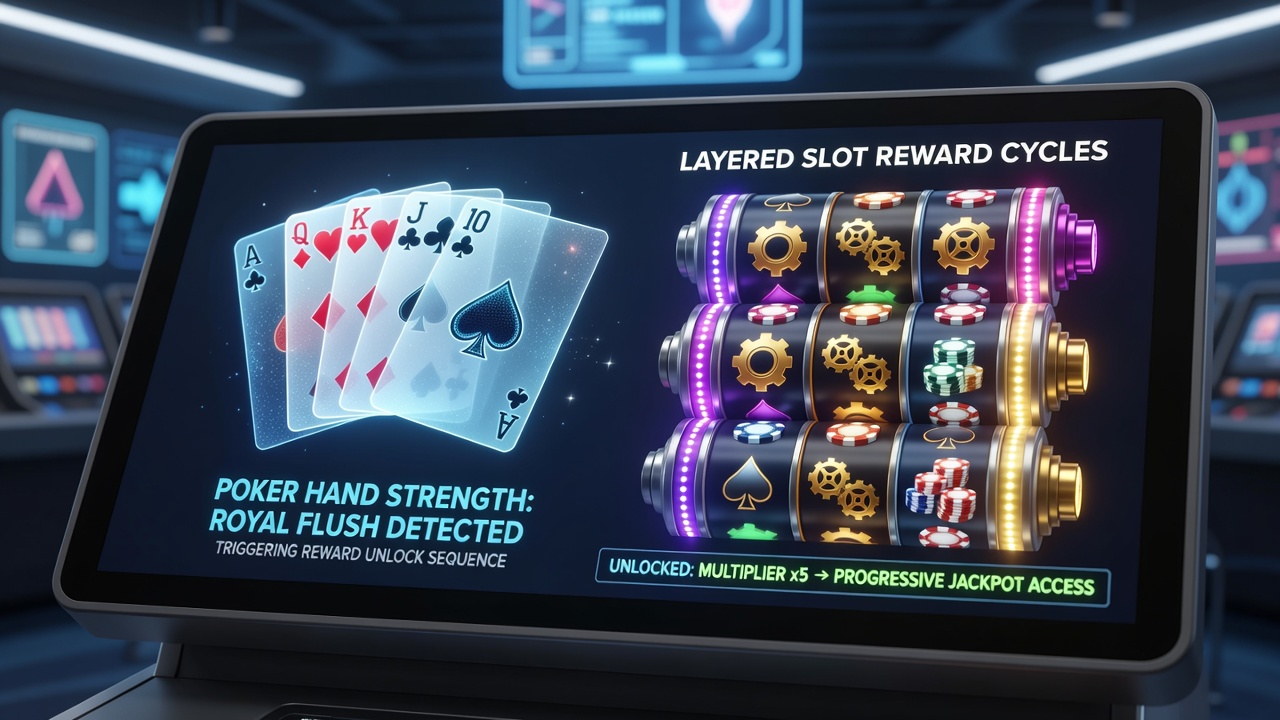
Player Progression Through Reward Layers
Entry into the first reward layer typically occurs after any pair or higher appears within a monitored poker sequence. Advancement to the second layer demands cumulative strength from multiple hands, often requiring at least one straight or flush within a set number of rounds. The uppermost cycle activates only upon detection of four of a kind or royal flush results, unlocking time-limited slot features such as expanding wild reels or progressive multipliers. According to data compiled by European gaming research groups, these upper tiers display distinct volatility profiles that differ from base game mathematics, with return-to-player percentages recalibrated per layer to reflect added complexity.
Technical Implementation Details
Backend systems employ lookup tables that assign numerical values to each possible five-card combination, feeding results directly into slot cycle controllers. When a hand meets threshold criteria, an event listener initiates the corresponding reward subroutine without player input. This architecture supports simultaneous operation across thousands of concurrent sessions, as documented in technical papers from university engineering departments. Observers note that latency remains under 200 milliseconds for most hand evaluations, preserving fluid gameplay across desktop and mobile interfaces.
Future Developments Expected After July 2026
Platform operators continue testing expanded hand libraries that incorporate seven-card variants and community card elements into trigger conditions. Early trials suggest these additions could create four or five distinct reward layers instead of the current three-tier model. Regulatory filings indicate that upcoming compliance checks will focus on randomness certification for both poker evaluation engines and linked slot cycles, ensuring no cross-contamination between independent random processes.
Conclusion
Hybrid systems linking poker hand strength to slot reward cycles represent a growing category within digital gaming environments. Documentation from multiple oversight agencies confirms that these mechanisms follow established probability standards while introducing new pathways for player progression. Continued refinement of trigger thresholds and layer structures remains evident in software releases scheduled through the remainder of 2026 and beyond.