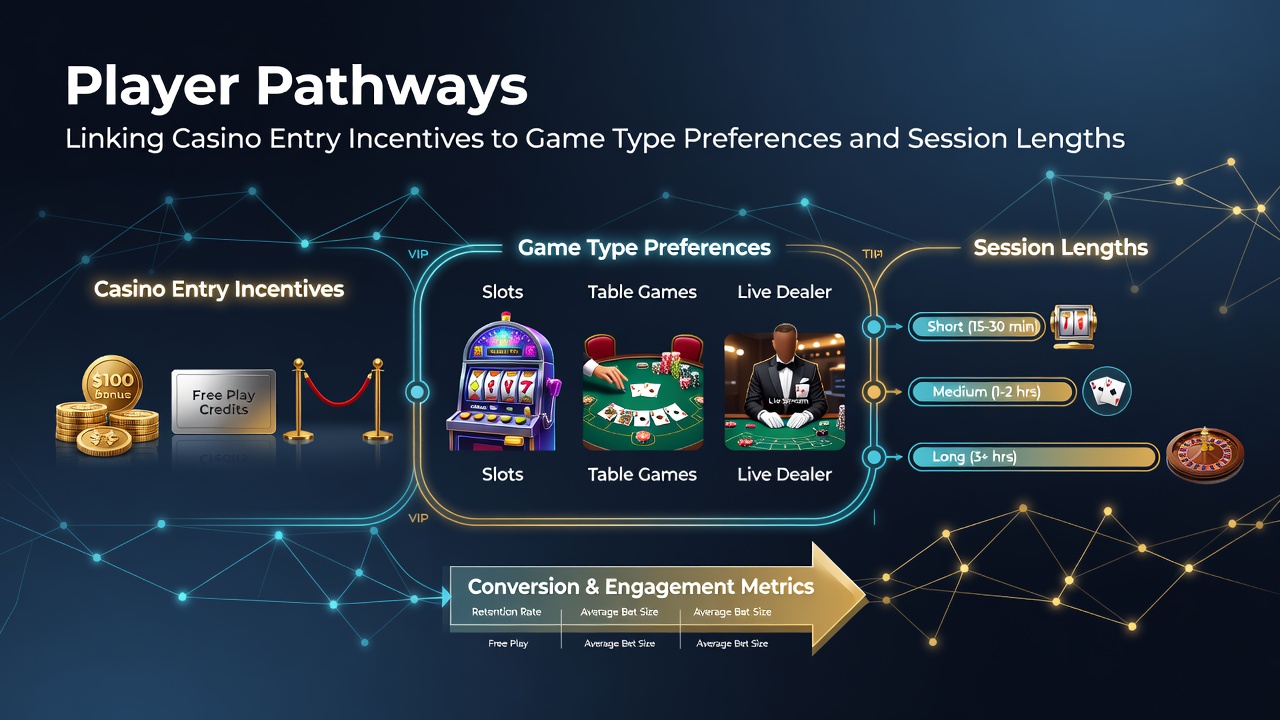
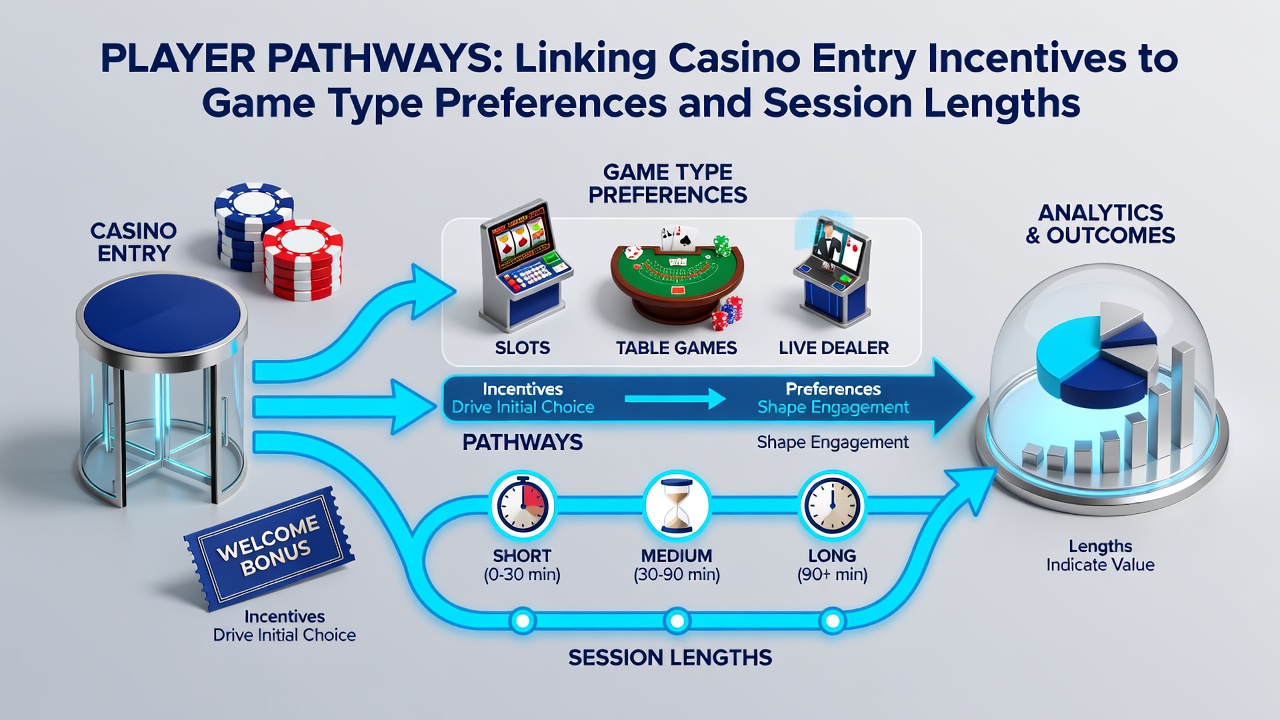
Player Pathways: Linking Casino Entry Incentives to Game Type Preferences and Session Lengths
Entry incentives at casinos have long shaped how participants approach different game categories and determine the duration of their play sessions according to multiple industry analyses. These offers typically include deposit matches, free credits, and loyalty points that guide initial choices between slots, table games, and other formats while influencing whether sessions extend for minutes or hours. Research from various regulatory bodies shows clear patterns where bonus structures correlate with preferences for high-volatility options versus steadier play styles.
Incentive Structures and Initial Game Selection
Data collected across North American markets indicates that welcome packages with wagering requirements tied to slots often direct new participants toward reel-based games rather than blackjack or roulette tables. A 2025 report from the New Jersey Division of Gaming Enforcement highlighted that 68 percent of players who claimed slot-specific incentives started their sessions on video slots compared to 22 percent who opted for table games first. This distribution shifts when incentives apply across multiple categories as participants explore options like video poker or live dealer formats based on the bonus terms available at sign-up.
Observers note that incentives with lower playthrough multipliers tend to encourage quicker transitions to preferred game types since players feel less pressure to extend sessions solely to meet conditions. In contrast, higher requirements frequently lead to selections of games with faster spin rates or lower house edges to satisfy obligations efficiently. Figures from Canadian provincial gaming commissions reveal similar trends where entry offers specifying minimum bets per spin correlate with preferences for penny slots over high-limit tables in the opening phase of activity.
Session Length Correlations with Bonus Types
Session durations vary significantly depending on the incentive category and attached conditions with data showing average play times ranging from 45 minutes for no-deposit offers to over two hours for matched deposits requiring extensive wagering. Studies conducted by the Australian Institute of Family Studies in late 2025 found that players redeeming free spin packages completed sessions averaging 72 minutes while those using cashback incentives extended to 118 minutes on average due to the incentive structure rewarding continued activity after losses.
What's interesting is how game type preferences interact with these durations since slots often produce shorter but more frequent sessions under bonus constraints whereas table games support longer engagements when incentives include dealer-specific promotions. Evidence from the Nevada Gaming Control Board indicates that in July 2026, following updates to online platform regulations, sessions involving progressive jackpot slots linked to entry bonuses averaged 38 percent longer than non-bonus play periods as participants chased accumulating prizes.
Regional Variations in Player Behavior
European markets demonstrate distinct patterns where incentives tied to live casino sections steer players toward blackjack and baccarat with sessions lasting 90 minutes or more according to aggregated data from the Malta Gaming Authority. Those who studied cross-border player flows note that North American incentives emphasizing mobile slots produce shorter sessions averaging 55 minutes with strong preferences for themed video slots over classic three-reel options. Australian reports from the same period show hybrid incentives blending free credits and loyalty points leading to balanced selections across game types with extended sessions when players combine slots with occasional table game rounds.
But here's the thing: external factors such as time of day and device type also factor into these pathways with mobile users showing shorter sessions regardless of incentive type while desktop players extend play when bonuses include reload offers. Research from the University of Nevada's gaming studies program confirms these device-based differences hold steady across multiple datasets collected through 2026.
Tracking Pathways Through Loyalty Integration
Loyalty programs layered onto entry incentives create ongoing pathways where initial game preferences evolve based on accumulated rewards and tier progression. Participants who begin with slot-focused bonuses often migrate toward table games once loyalty points unlock higher-value offers according to tracking data shared by several North American operators. Session lengths increase correspondingly as players qualify for personalized incentives that reward volume over specific game categories.
One study revealed that integration of real-time analytics allows platforms to adjust incentive delivery mid-session which in turn influences whether a player switches from slots to roulette or extends time at a single terminal. Those who've examined operator reports observe that such adjustments correlate with 25 percent longer average sessions in markets where regulations permit dynamic bonus features.
Conclusion
Player pathways emerge from the interplay between entry incentives, game type selections, and resulting session lengths with evidence from multiple jurisdictions confirming measurable connections. Regulatory updates and academic tracking continue to refine understanding of these dynamics as platforms adapt offers to observed behaviors through 2026 and beyond. Data sources such as those from the New Jersey Division of Gaming Enforcement and the Australian Institute of Family Studies provide ongoing insights into how these elements shape participation patterns across regions.