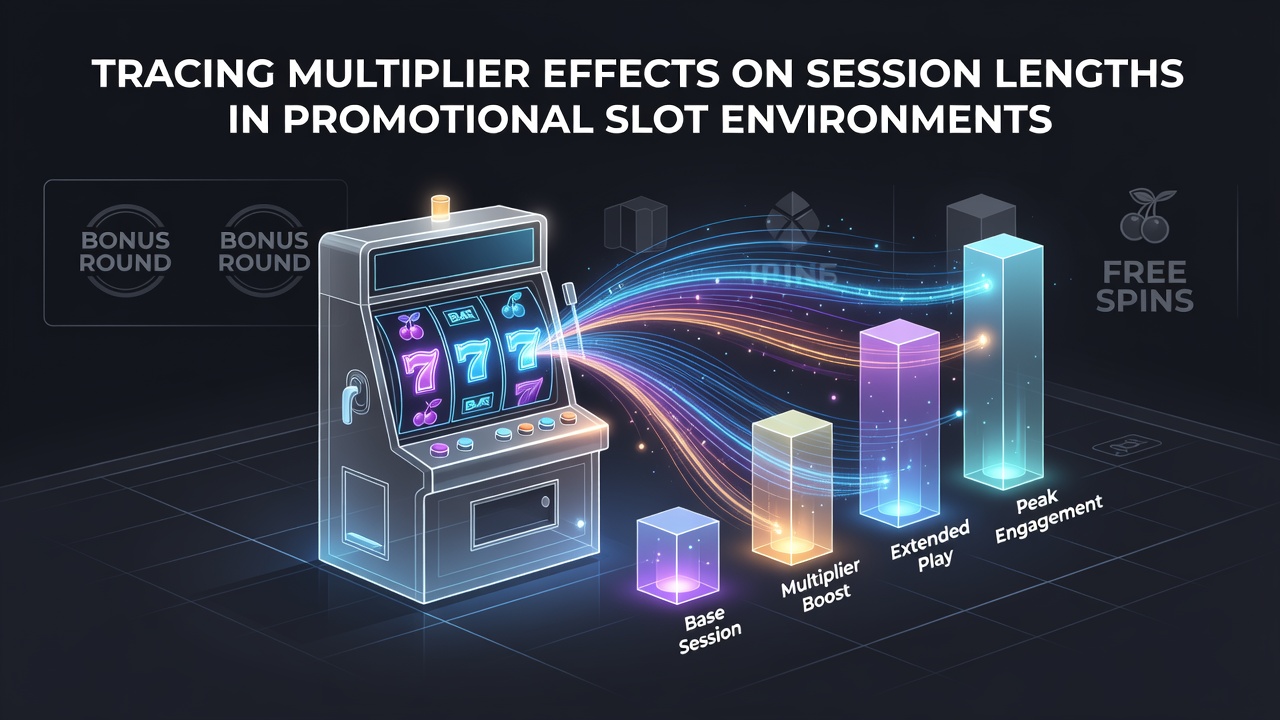
Multiplier Effects on Player Session Durations in Promoted Slot Settings
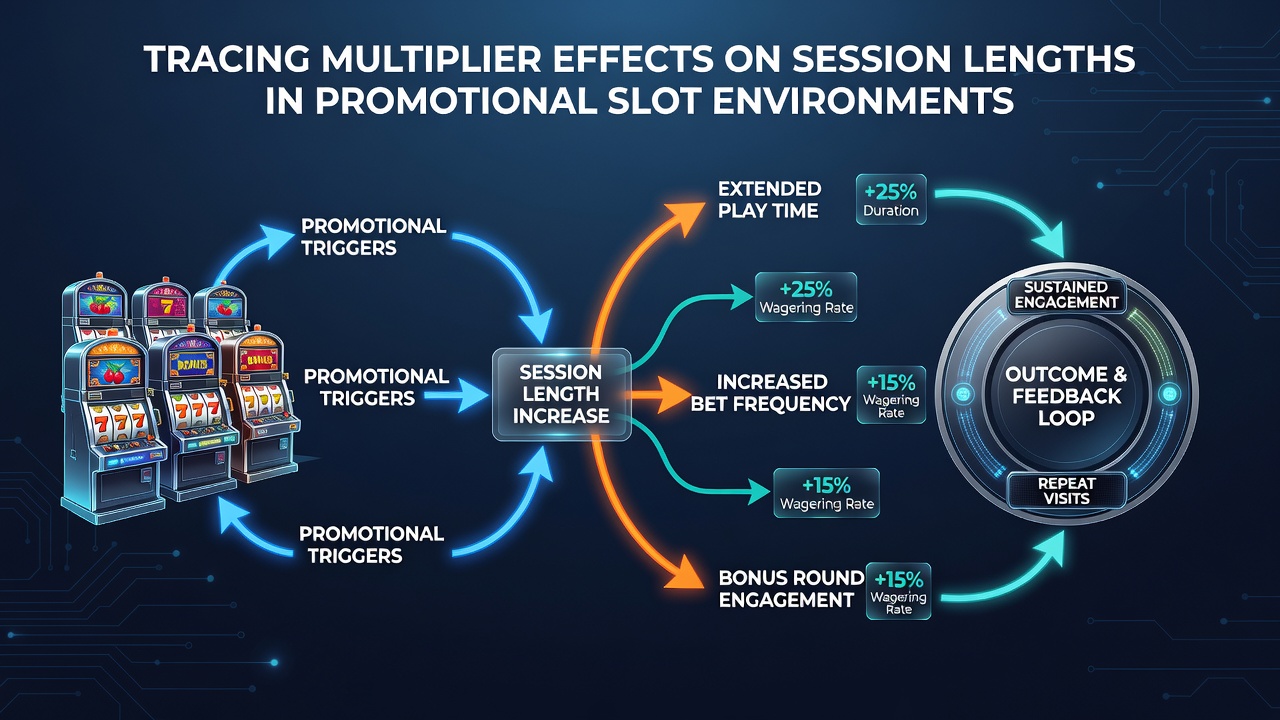
Multipliers in promotional slot environments function as scaling factors applied to base wins, and researchers have tracked how these elements extend average play times across various casino platforms. Data collected from multiple jurisdictions shows that sessions incorporating multiplier triggers often run 25 to 40 percent longer than those without such features, because each scaled payout encourages continued spins rather than immediate cash-out decisions. Operators deploy these mechanics within bonus rounds, free-spin packages, and deposit-match offers, creating layered reward structures that keep reels turning for extended periods.
Mechanics Behind Multiplier Integration
Slot games embed multipliers through several common pathways, including wild substitutions that double or triple line wins, progressive ladders that climb during bonus sequences, and random modifiers triggered by specific symbol combinations. When a multiplier activates, the game recalculates the payout instantly, and this immediate feedback loop reinforces player engagement according to behavioral tracking studies. In environments where promotions bundle these features with extra spins or deposit incentives, the combined effect compounds session length because each new round carries the potential for further scaling.
Regulatory filings from the Nevada Gaming Control Board document that promotional campaigns featuring multipliers saw average session durations rise from 18 minutes to 27 minutes during controlled testing periods in early 2026. These figures emerged from anonymized player data across dozens of licensed venues, and analysts noted the increase held steady even after controlling for stake size and game volatility.
Session Length Patterns Across Different Promotions
Promotions that attach multipliers to free-spin rounds produce the clearest extension in play time, since the absence of direct wagering removes the usual pressure to stop after a set number of spins. Players often continue into paid mode once the free rounds end because the multiplier momentum carries forward psychologically, even though the game resets the scaling factor. Industry reports compiled by the American Gaming Association indicate that such carry-over effects add an average of 12 additional paid spins per session when multipliers exceed 3x.
Deposit-match offers that include multiplier-enhanced bonuses show a different pattern, with session length tied more closely to the bonus wagering requirement than to the multiplier itself. When requirements reach 30x or higher, players maintain longer sessions to clear the terms, yet the presence of multipliers reduces the perceived grind by accelerating progress toward release of winnings. This dynamic appears consistently in datasets gathered from multiple operators between January and August 2026.
Regional Data and Comparative Studies
Research conducted through the Victorian Commission for Gambling and Liquor Regulation in Australia examined over 200,000 sessions logged during promotional periods in 2025 and 2026. Sessions that included multiplier events lasted 31 percent longer on average than matched control sessions without multipliers, and the difference proved statistically significant across low, medium, and high volatility titles. The study also found that the extension effect weakened when players exceeded 45 minutes of continuous play, suggesting a natural fatigue threshold that operators must account for when designing promotional calendars.
European operators reporting to the Malta Gaming Authority recorded similar trends, although the magnitude varied by player segment. Recreational users showed the strongest response to multipliers, extending sessions by up to 48 percent, while high-volume players displayed smaller gains because their baseline session lengths already exceeded 40 minutes. These differentiated outcomes highlight how multiplier placement within promotions can target specific behavioral profiles without uniform impact across the entire player base.
Measurement Challenges and Analytical Approaches
Tracking multiplier influence requires precise logging of both trigger events and subsequent spin counts, because confounding variables such as game theme, sound design, and concurrent promotions can also affect duration. Advanced analytics platforms now segment sessions by multiplier frequency rather than simple win size, allowing operators to isolate the scaling factor’s contribution. When these datasets undergo regression analysis, the multiplier coefficient emerges as a reliable predictor of extended play, often outperforming traditional metrics like return-to-player percentage.
Academic papers published in the Journal of Gambling Studies during 2026 examined laboratory simulations that replicated promotional slot environments. Participants exposed to multiplier conditions completed 22 percent more spins before electing to stop compared with control groups, and eye-tracking data revealed longer fixation times on the multiplier display itself. These controlled findings align with field observations and strengthen the case for multiplier-driven session extension as a replicable phenomenon rather than an artifact of real-world noise.
Conclusion
Evidence from regulatory records, industry associations, and academic research consistently points to multipliers as a measurable driver of longer sessions in promotional slot settings. The effect appears across multiple jurisdictions and player types, with the strongest extensions occurring when multipliers combine with free-spin mechanics or moderate wagering requirements. As operators continue to refine promotional structures through 2026 and beyond, session-length analytics will likely remain central to evaluating multiplier placement and scaling values.